SEVENTY RETURNS
After years of searching the world for wildlife, I came home. On a single shoreline in my own backyard, I discovered a world that would change everything I thought I understood about nature and my place within it.
A SHORT FILM AND FIELD JOURNAL BY SEAN LO
THE FILM

COMING SOON
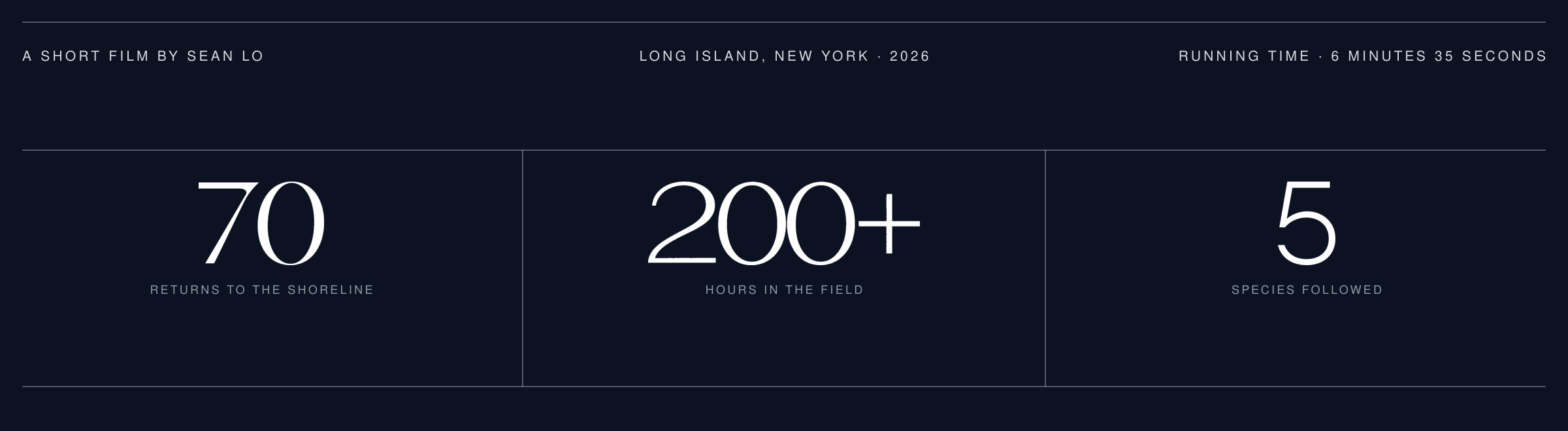
A SHORT FILM BY SEAN LO
LONG ISLAND, NEW YORK · 2026
RUNNING TIME · 6:35
WHY THIS FILM EXISTS
THE BEACH
IS NOT
EMPTY.
Long Island’s shoreline is a place of ritual. Every summer, people come from near and far to breathe, celebrate, kindle relationships, and begin anew.
Alongside these familiar traditions, another world quietly unfolds. These beaches are a refuge, a nursery, and a vital feeding ground for shorebirds whose journeys span thousands of miles.
Filmed from March through August, this project explores the fragile meeting point between what we seek from nature and what other lives need from the same shores. It is not a story about villains or heroes, but about what becomes possible when good intentions deepen into understanding, and understanding becomes respect and restraint.
What began as an attempt to photograph birds became something else entirely: a meditation on attention, responsibility, and what changes when we begin to see a familiar place through the lives that depend on it.
THE UNSEEN LIVES OF THE SHORE
A SEASON AT THE WATERLINE
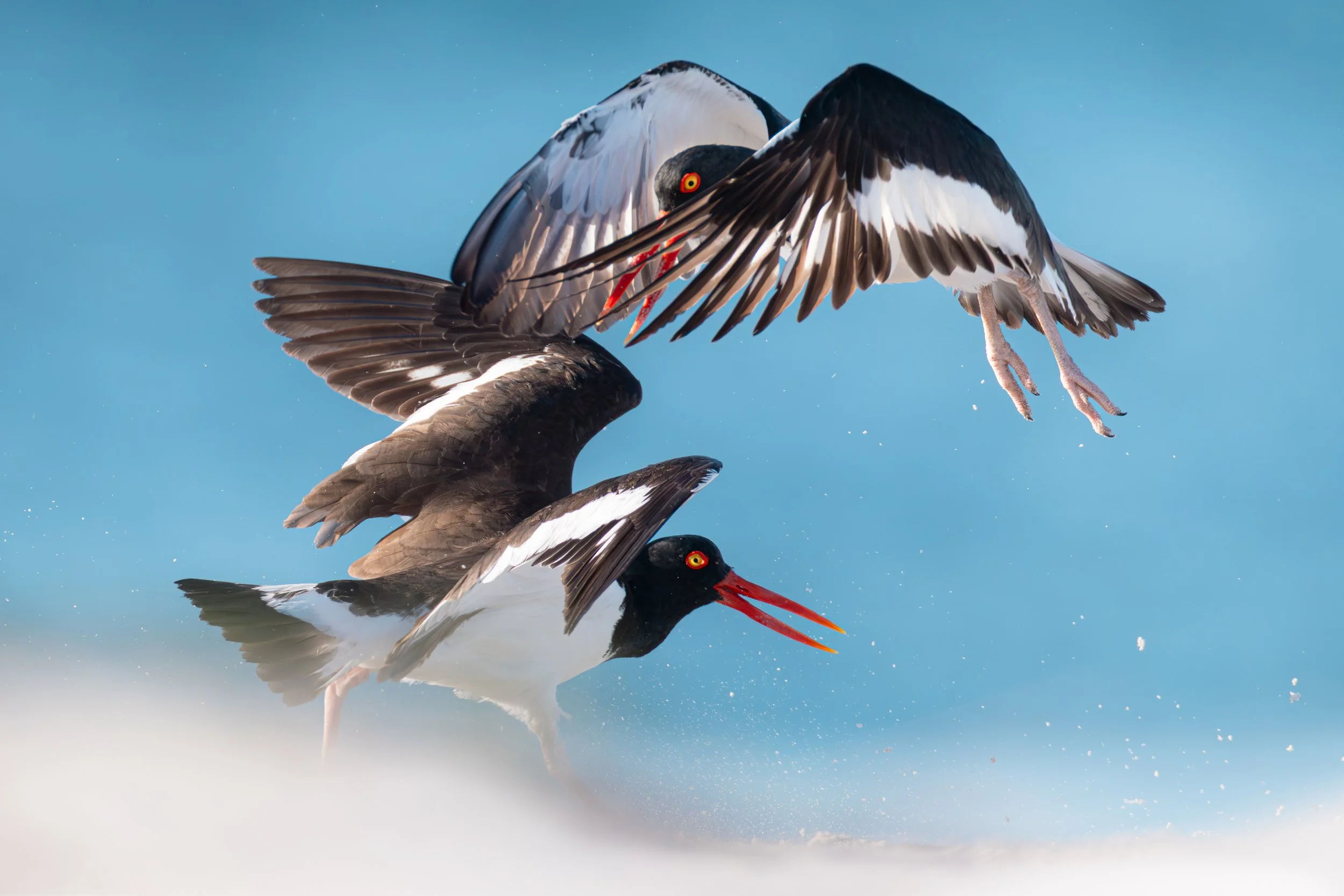
American Oystercatcher
Haematopus palliatus
A Learned Craft: American Oystercatchers use two distinct techniques to open shellfish. Some cut the muscle holding the shell closed, while others hammer through it. Parents teach their young one of these methods during the first year.
Least Tern
Sternula antillarum
Cooling the Nest: On the hottest days, adults wet their belly feathers and return to the nest, using the moisture to keep their eggs from overheating in the open sand.
Black Skimmer
Rynchops niger
Cat Eyes: Black Skimmers belong to the only bird genus known to have pupils that narrow into vertical slits. This cuts glare from water and pale sand by day while allowing the pupil to open wide when they feed in low light.
Common Tern
Sterna hirundo
Saltwater Drinkers: Coastal common terns have special nasal glands that filter out excess salt, letting them drink seawater.
Piping Plover
Charadrius melodus
Born Running: Piping Plover chicks leave the nest and begin finding their own food within hours of hatching, yet they cannot fly for nearly a month. Protected beach zones give them space during the vulnerable weeks between first steps and first flight.
Endangered in New York: Thanks to conservation efforts, Atlantic Coast numbers have more than doubled since protection began, but recovery remains fragile.
BEHIND THE SCENES
WHAT THE IMAGES DO NOT SHOW
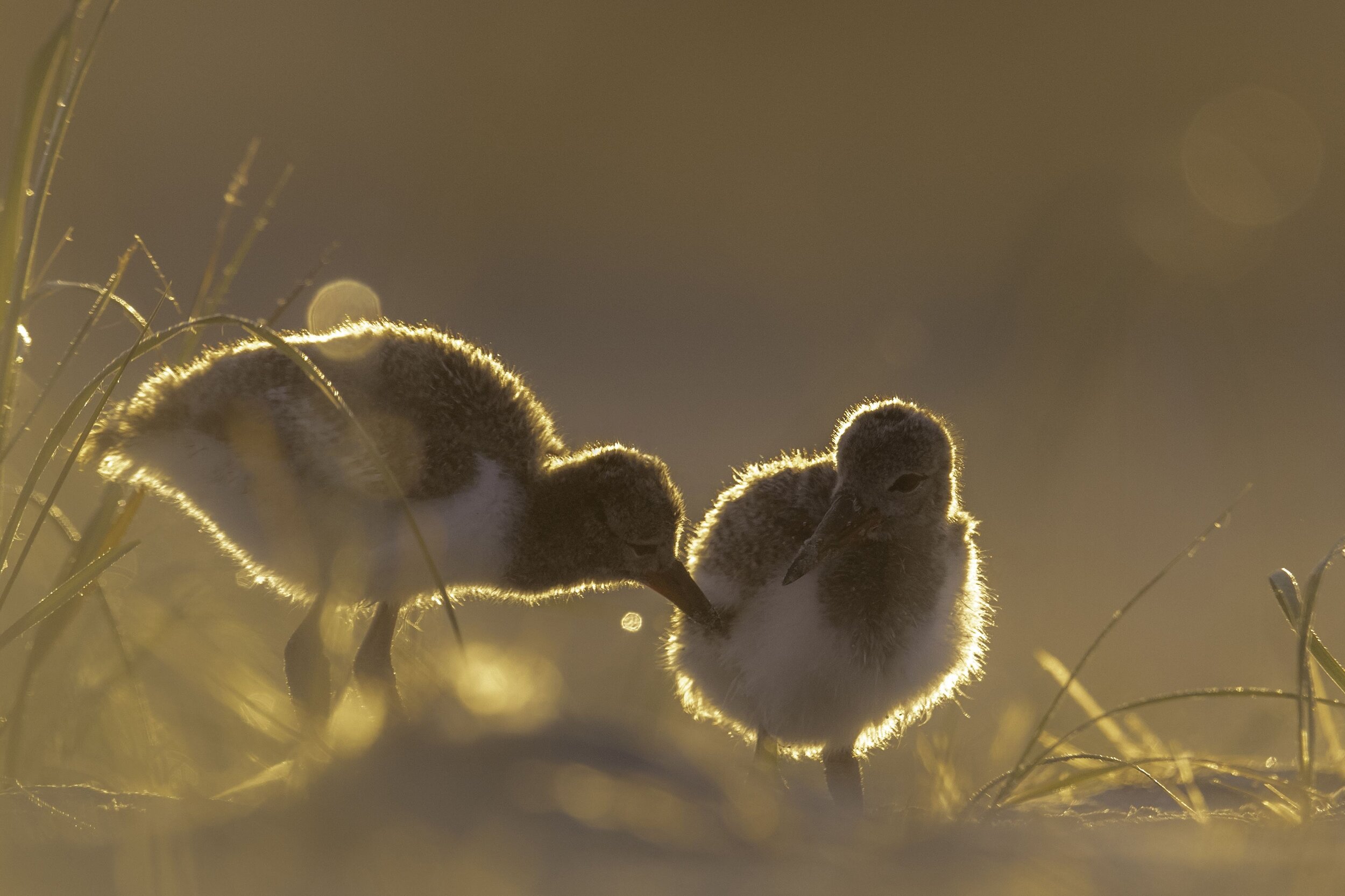
BEFORE SUNRISE · A 5:30 sunrise meant being on the beach by 4:30, with enough time to cross the sand, enter the surf, and settle before the light. Arriving early also gave the birds time to grow accustomed to my presence.
Seventy returns meant working through rain, salt, wind, heavy humidity, and the haze of distant wildfire smoke. Conditions changed from morning to morning. The responsibility to work carefully did not.
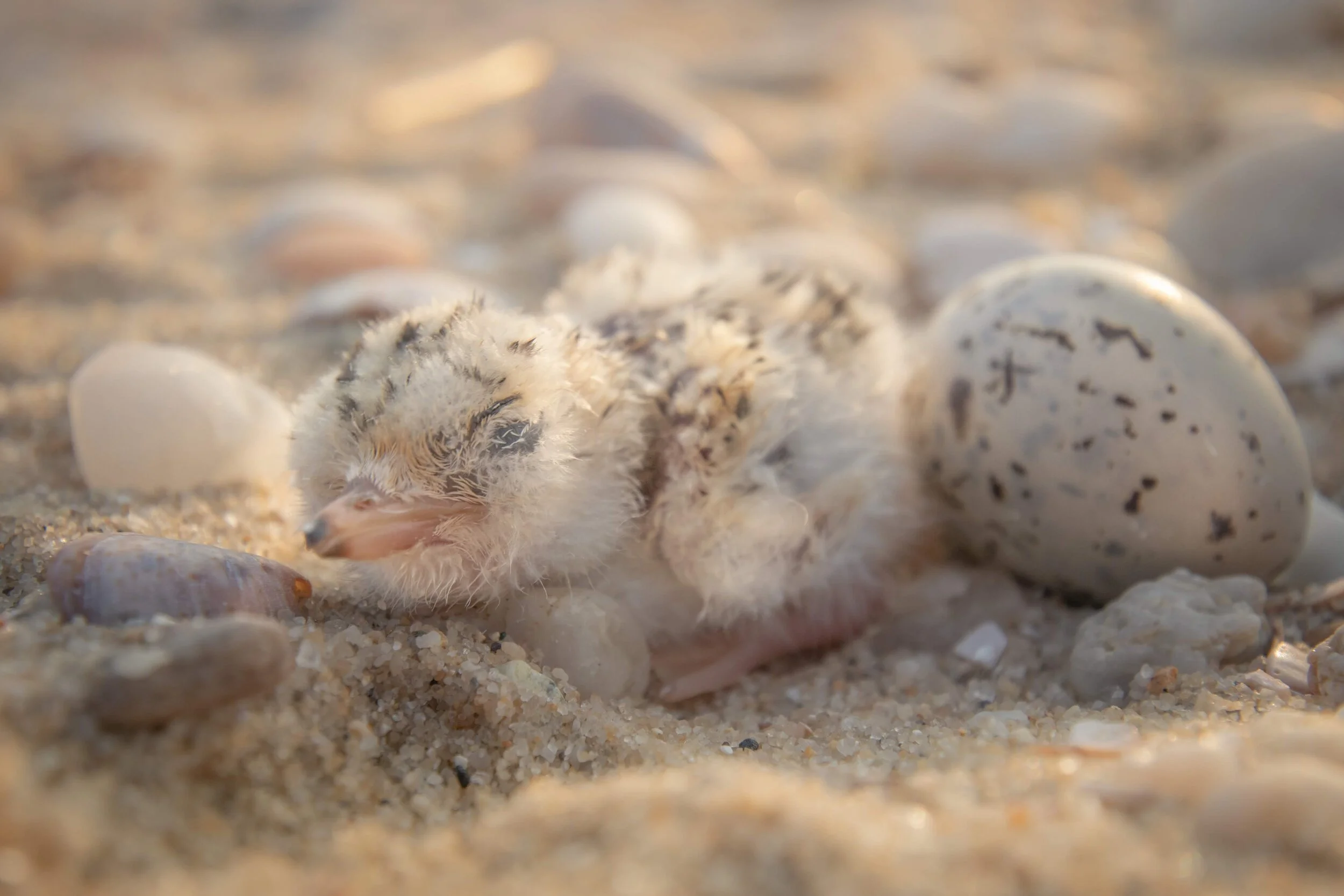
DISTANCE FIRST · A newly hatched Least Tern weighs about as much as a postcard, yet appears immense within the frame. Intimacy came through focal length and respectful distance, never through stress or proximity.

ETHICS FIRST · Loving wildlife photography means placing the welfare of the subject before the image.
PRODUCTION NOTES
NO A.I.
NO ARTIFICIAL INGREDIENTS
In summer, golden light lasts only minutes, and wildlife keeps its own time. Nearly every sequence was built from moments captured on different mornings. Some brought perfect light but no activity. Others meant five hours in the field without a single shot reaching the final cut.
Nothing was manufactured to fill those absences. No artificial lighting recreated the sunrise, and no generative AI created wildlife, behavior, or environments. A film about protecting real lives had to remain faithful to what truly happened.
Long lenses created intimacy from a respectful distance. Macro, wide-angle, and partially submerged cameras revealed the shoreline at different scales. The waves, wind, calls, and ambient sounds were recorded there too—on the same beach where the story unfolded.

THE FILM ENDS. THE RELATIONSHIP CONTINUES.
WHAT CARE ASKS OF US
I did not make this film alone.
Long before I arrived with a camera, biologists, conservationists, volunteers, local governments, and generations of beachgoers were working to protect this shoreline.
Every fence raised, nest monitored, chick counted, balloon recovered, and conversation shared helped make these moments possible. The future of these birds will not be determined by one person alone. It will be shaped by ordinary acts of attention, empathy, and restraint, repeated by all of us.
Imagine if every visit ended with each of us carrying out just one piece of litter we did not bring. The difference does not have to begin with someone else. It can begin with what is already within our reach.
Town of Hempstead Department of Conservation and Waterways
Atlantic Marine Conservation Society
Audubon New York
Balloon Mission
A LITTLE SPACE GOES A LONG WAY
Nesting birds divide their attention between protecting their chicks and watching for danger. By remaining outside fenced areas and giving families a little extra room, we allow parents to stay focused and make their nests and chicks less vulnerable to predators.
WALK AROUND, NOT THROUGH
Flocks at the waterline may be feeding or resting during a journey of thousands of miles. A gentle curve around them lets the birds conserve their energy while leaving plenty of shoreline for everyone to enjoy.
LEAVE NO TRACE
Fishing line and ribbons can entangle wildlife. Small pieces of plastic can be mistaken for food. Scraps left behind can attract predators to nesting areas. Carrying out everything we bring helps keep the shoreline safe long after we leave.
JOIN THE EFFORT
Volunteer, attend a cleanup, support local conservation, or simply share what you have learned. Every act of care strengthens the work already underway.
FOR SCREENINGS, CONSERVATION PARTNERSHIPS, SOCIAL MEDIA COLLABORATIONS, AND EDUCATIONAL USE
SEANLOPHOTO@GMAIL.COM